Oils in Soap
Chapter 1: the building blocks
Understanding the oils is the foundation of formulating recipes. A bar of soap is at its core: made by combining an oil mixture with lye water; thus the oils in the soap base were chosen for the design and function of that particular soap bar.
When oils and sodium hydroxide combine, they undergo a chemical reaction called saponification;
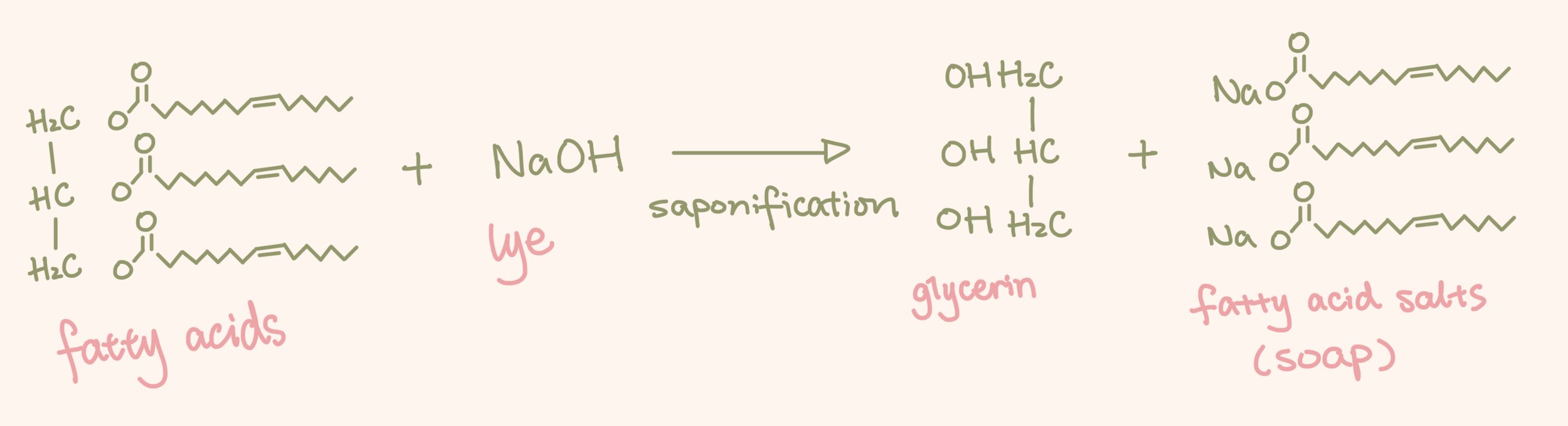
oils and lye are reacted into fatty acid salts (soap) and glycerin.
Not all oils act alike and each oil holds a different composition of fatty acids; this also affects how the soap will behave during saponification, how quickly it traces, as well as the final hardness, cleansing, conditioning, and lather of the soap.
To begin, think about the goals that you want to achieve with your recipe. A soap recipe is like a blueprint for a house - before choosing your materials, you must first decide what you want to make. Do you want a bar that has large, bubbly lather; do you want a gentle bar for sensitive skin; or do you want a firm bar that is going to last in a humid environment (like the shower)? From there, the types and proportions of oils that you should be using will start to narrow down.
Chapter 2: soap properties
The properties of a finished bar are determined by the types of fatty acids that are present in the oils and butters that make up the soap recipe. Each oil typically has its own distinct profile of fatty acids; most solid fats have a high content of saturated fatty acids, are typically solid at room temperature, and tend to produce a harder bar of soap, while liquid oils that are liquid at room temperature have higher amounts of unsaturated fatty acids, typically producing a bar that is more gentle and conditioning.
When several oils are combined, the different fatty acid profiles work together to create a final product that is balanced, so in general, most general-purpose soap recipes use a blend of oils.
1. Hardness
Hardness is how firm a bar of soap is after curing and how well it holds its shape during use. Solid or semi-solid fats at room temperature contain higher amounts of saturated fatty acids, such as lauric, myristic, palmitic, and stearic acids.
The most common hard oils are:
Coconut oil
Cocoa butter
Shea butter
Mango butter
Tallow
Palm oil
Hardness is important because if a bar is too soft, it may become mushy in the shower, have a slimy lather, or take very long to unmold. Fatty acids such as palmitic acid and stearic acid tend to contribute more to both hardness and longevity.
2. Cleansing
The term “cleansing” in soap can be a little misleading. All properly made soaps are glycerin and fatty acid salts; the fatty acid salts clean by attaching its hydrophilic head that is attracted to water and the lipophilic tail that is attracted to oils. So when you use a bar of soap, the lipophilic tail will attach to the dirt/oils, and the hydrophilic head will attach to the water and rinse the dirt/oils away.
When soap calculators give a bar a “cleansing value”, they are usually referring to the amount of certain fatty acids present, such as lauric acid and myristic acid.
Coconut oil is the most popular source of these fatty acids, which explains why it's used in most soap recipes.
The most misunderstood cleansing oil: castor oil. Like coconut oil, it boosts lather. Unlike coconut oil however, castor oil does not contribute to cleansing.
A big misunderstanding is that cleansing equals lather: cleansing is the process of removing dirt with soap, lather on the other hand, is the bubbles created whilst cleansing. Therefore, castor oil is used in soap recipes in order to improve the quality and stability of lather; because of this, castor oil is usually used in smaller percentages, commonly around 2-6% in a recipe. Using excessive amounts does not mean more bubbles and can result in a soft, sticky bar of soap.
However, stronger cleansing is not always better.
We have natural oils that help protect the skin barrier, a soap that removes too much oil may leave the skin feeling tight and dry. Therefore, body soap, facial soap, and household cleaning soap use very different percentages of cleansing oils.
3. Lather
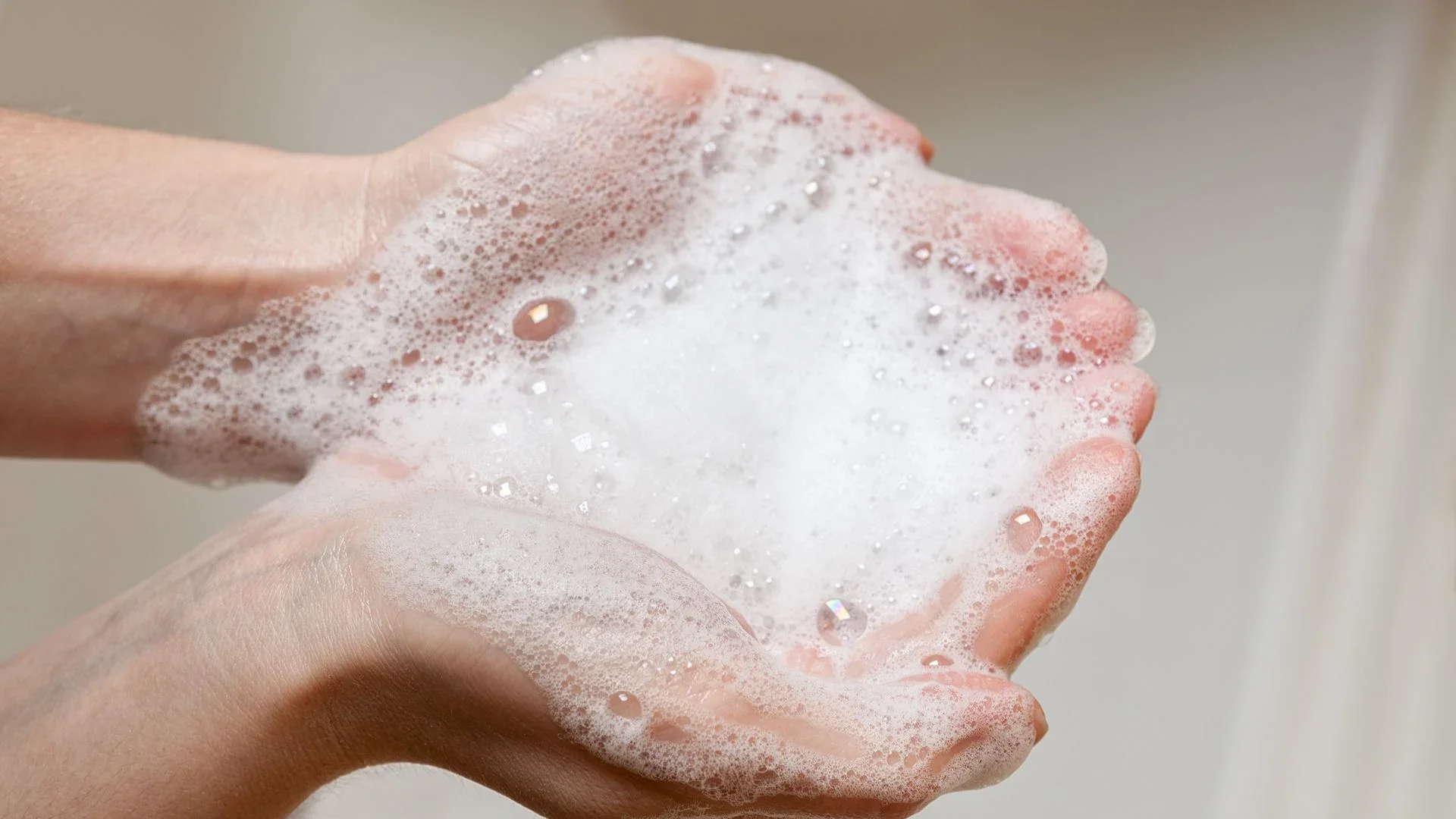
When we think of soap,
it is the bubbles that come to mind.
Coconut oil, babassu oil and palm-kernel oil make lots of bubbles quickly when the soap comes into contact with water. However, as previously stated, lots of bubbles does not necessarily mean that the soap is more cleansing, and a low-lather soap can still clean effectively.
Ricinoleic acid, which is abundant in castor oil, helps to support the lather and to stabilize it. When used in small quantities,
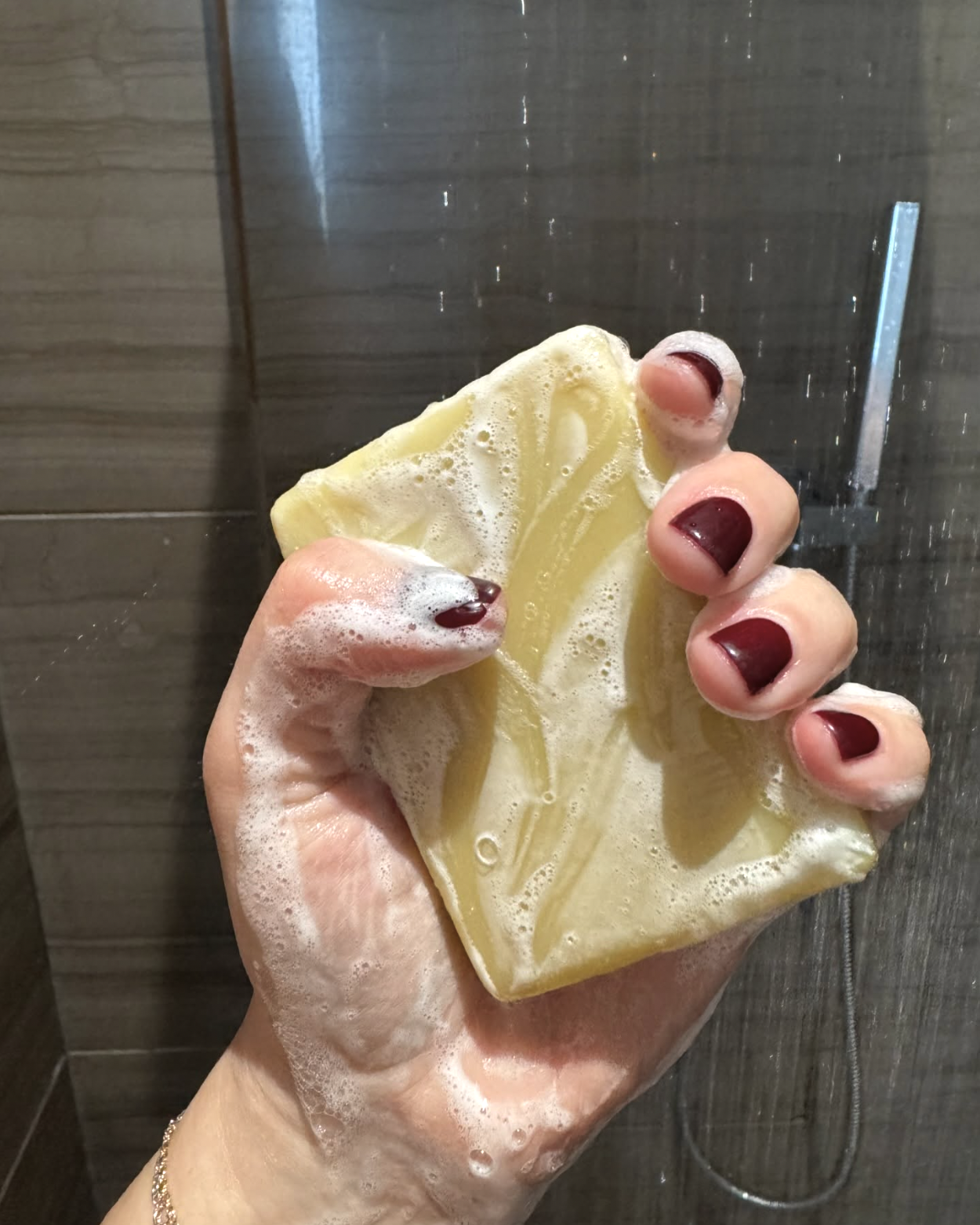
Not all lather are large bubbles.
Some formulations are designed to create a dense, creamy foam instead. (ig: @chagrinvalleysoap)
Oils that contribute to creamy lather include:
Shea butter
Cocoa butter
Tallow
Lard
These ingredients can make the foam feel richer and more substantial.
4. Conditioning
Oils rich in fatty acids such as oleic and linolenic acid contribute to the soap’s ‘conditioning’ properties, or how mild the soap feels on the skin after washing.
Olive oil
Avocado oil
Sunflower oil
Sweet almond oil
Rice bran oil
These oils tend to create soaps that feel gentle and less stripping than formulas containing large amounts of high cleansing oils.
However a down side of conditioning oils is its hardness. Most of these oils are liquid at room temperature and produce a softer soap. A recipe containing very large amounts of soft oils take longer to unmold, require a longer cure, and produce a bar that wears down more quickly.
Some highly unsaturated oils are also prone to oxidation, which increases the risk of dreaded orange spots, commonly referred to by soap makers as DOS.
5. Longevity
Longevity describes how slowly a bar dissolves during use. This property is related to hardness, but not identical.
A soap can be physically hard yet dissolve quickly in water. Oils rich in palmitic acid and stearic acids generally contribute to a long-lasting bar. Good curing is also an important factor: keeping the bars in a cool, dry, and well-ventilated area with good spacing evaporates the excess water more efficiently and produces a harder, long-lasting bar.
Chapter 3: 34/33/33 - the golden triangle
34/33/33 - as I like to remember it as the golden triangle of oils, is a great starting ratio for beginners; it results in a bar that is balanced in conditioning, cleansing and lather, and hardness.
34% olive oil
33% coconut oil
33% palm oil
(for a palm free recipe: replacing the palm oil with 33% shea butter or cocoa butter is not a good idea as butters are a lot more expensive and cause the batter to thicken faster)
Palm-free alternative:
50% olive oil
30% coconut oil
20% shea butter
Using one of the recipe above as a starting point; suppose you want to make a batch using 1000 g of total oils,
the 34/33/33 would contain:
340 g olive oil
330 g coconut oil
330 g palm oil
While the palm-free alternative contains:
500 g olive oil
300 g coconut oil
200 g shea butter
The olive oil provides gentleness, the coconut oil adds to the cleansing ability of the soap, and the palm oil or shea butter provides hardness and longevity.
Chapter 4: tweaking your oils
Once you make a batch with one (or both) of the oil percentages listed above, now you understand how soap behaves and trace; the next step is to customize it based on your needs and preferences.
Do you want it to be gentler? More bubbly? Harder?
If you want a gentle bar, the easiest place to start is to reduce the amount of coconut oil. Coconut oil is mainly used for cleansing and lather; but for some people, too much cleansing will dry out the skin. You could reduce the percentage of coconut oil to 15-25% and increase the percentage of a conditioning oil instead; for baby and extra-gentle bars, a lot of the time, soap makers will reduce coconut oil to 5% or not be included at all.
For a gentle bar:
50% olive oil
15% coconut oil
25% palm oil
10% avocado oil
If you want more bubbles, one option is to slightly increase coconut oil, although this will also increase cleansing; another option is to introduce 3-5% more castor oil.
For a bubbly lather:
40% olive oil
30% coconut oil
5% castor oil
25% palm oil
Using more of the hard oils like palm oil, shea butter, cocoa butter, mango butter, tallow, lard, etc.can create a harder soap. However adding more butters can make the lather feel more dense and almost a lotion-like-lather.
Chapter 5: recalculate the lye
The amount of sodium hydroxide lye required for saponification changes with the oil blend.
The saponification value is the amount of alkali (sodium hydroxide for bar soap or potassium hydroxide for liquid soap) required to saponify a particular quantity of that specific oil. Therefore, even if the total oil mass remains constant, replacing one oil with another can change the correct lye amount.
Every modified recipe should be run through a reliable lye calculator before making the batch, even if the difference is minimal, it is better to be safe than sorry.
